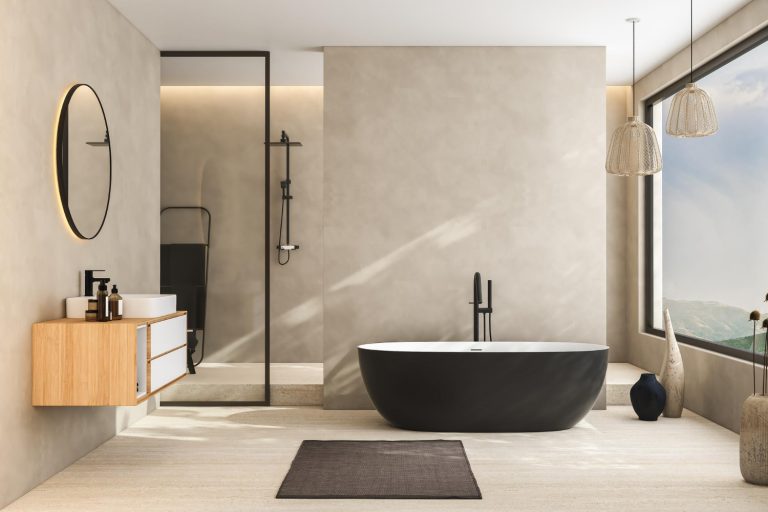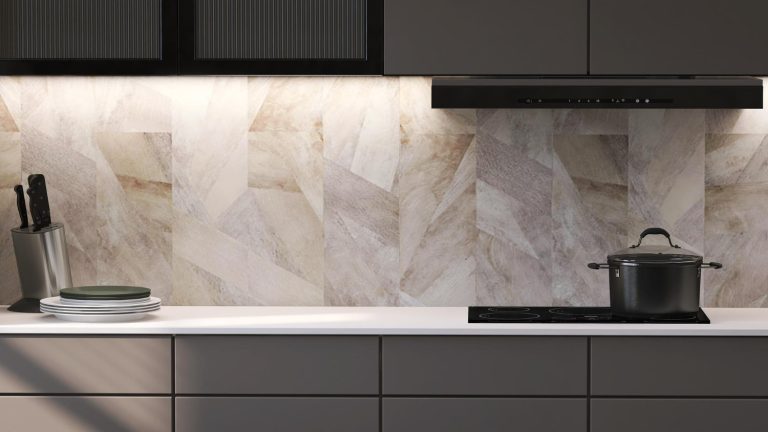
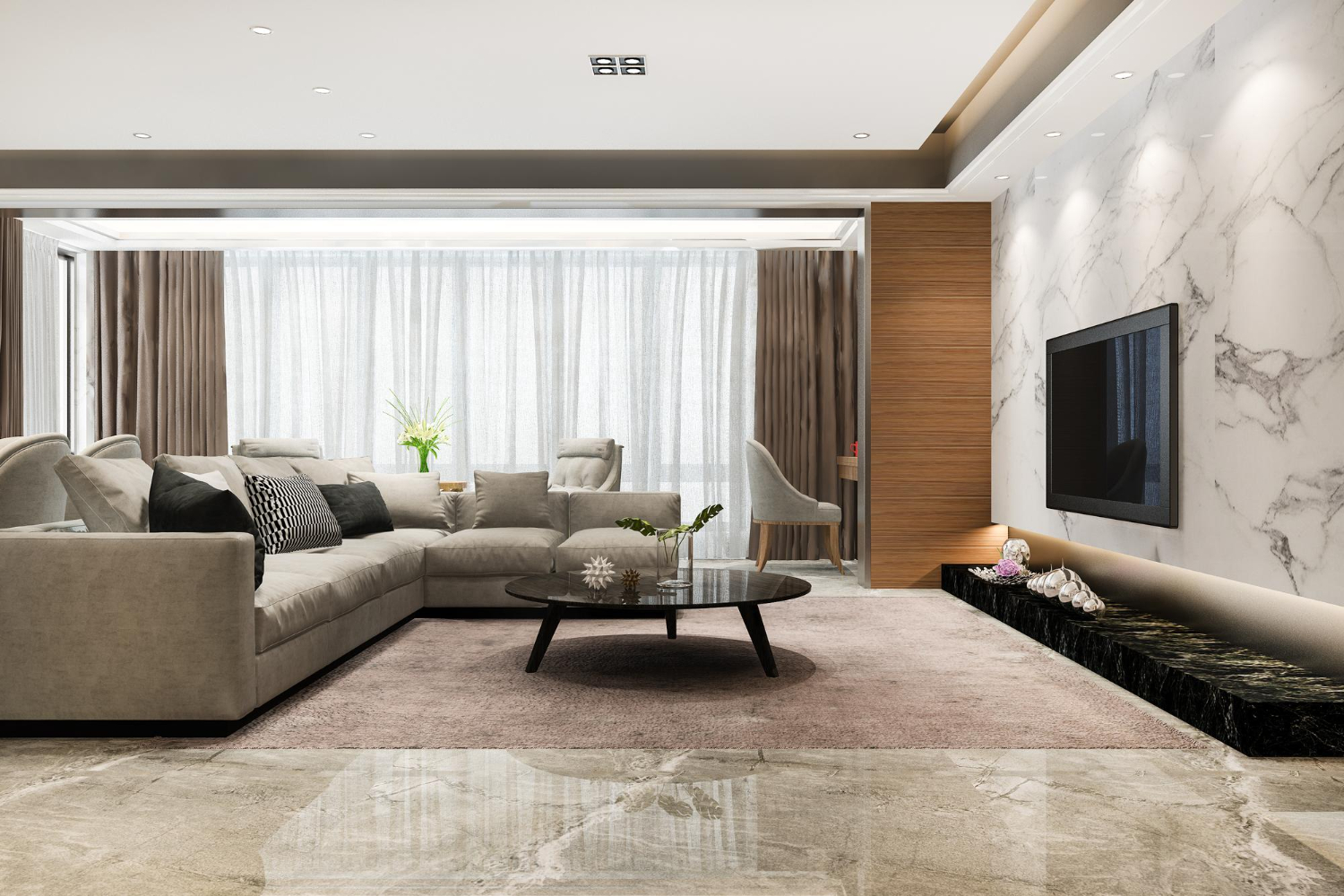
For most Greek homes, the safest and most timeless choice of tiles for the living room is porcelain tiles in a matt or satin finish, with the shade chosen according to the natural light and the size of the room.
The hard part, of course, is not finding “nice” tiles in a showroom. The real challenge is finding the ones that will look right in your own living room, are easy to clean and that you won’t be tired of after just two years.
In this guide we look at which options work best, which common mistakes to avoid and what to think about if the new floor is part of a complete renovation.
Which Tiles Suit Most Living Rooms?
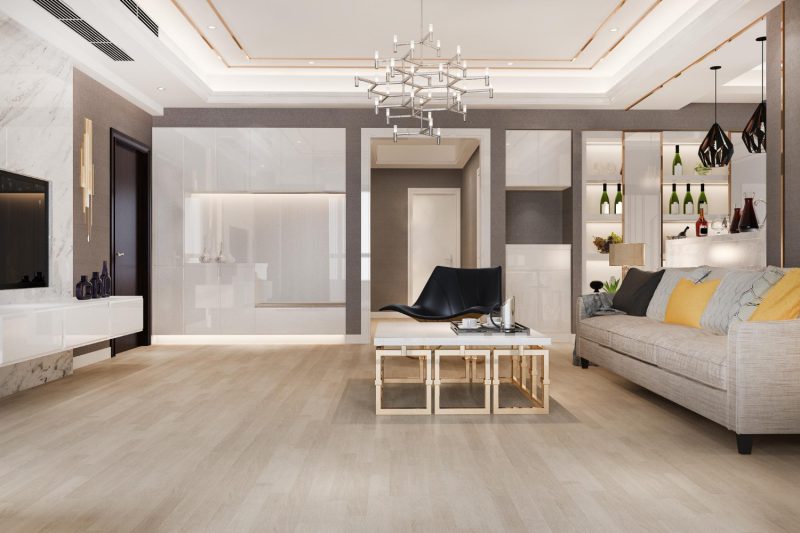
For most living rooms, a choice that will not let you down is a porcelain tile in a neutral shade, with a subtle texture and without too much shine. In practice, this means the following options:
- Beige or greige: For a warm, earthy and very bright result.
- Light grey: For a more minimal, modern and “clean” living room.
- Wood effect: If you want the warmth of natural wood without the worry of maintenance and scratches.
- Concrete or stone effect: For a contemporary, industrial or calm result.
- Large formats (60×60, 80×80 or 60×120): Because they reduce grout lines and make the room look bigger.
If you want your living room to always look current, avoid eccentric patterns and very strong colours. The floor works best as a “calm canvas”. Character and intensity can come from the furniture, rugs, lighting and artwork.
Before Choosing a Design, Think About How You Live in the Room
A tile that looks like a masterpiece in a bright penthouse can “smother” a small mezzanine apartment. The choice should not be based on design alone.
If the living room is small or does not get much light
In this case, go for light-coloured tiles with very soft, subtle veining. Shades such as off-white, warm beige, light greige and light grey help the room “breathe” and look more spacious.
That does not mean you need clinical white. Pure white often feels cold and looks dirty at the slightest mark. A “broken” white is much easier to live with.
If you have a large living room or an open-plan kitchen and living area
This is the perfect setting for large-format tiles. With very few grout lines, they create a striking, seamless and luxurious result. If the kitchen is open to the living room, the best thing you can do is use the same floor throughout. “Cutting” the space in half with different tiles often makes it look smaller and less harmonious.
If the home has children, pets and… a lot of traffic
Here practicality wins hands down over magazine looks. Avoid glossy tiles, very dark colours and heavily textured surfaces that collect dust in their recesses. Choose matt or satin finishes in mid-tones. A tile with gentle veining or a concrete texture “forgives” everything, from footprints to small stains and pet hair.
The Top Choices for Your Living Room
There is no tile that is ideal for everyone. There are, however, categories that suit most Greek homes better.
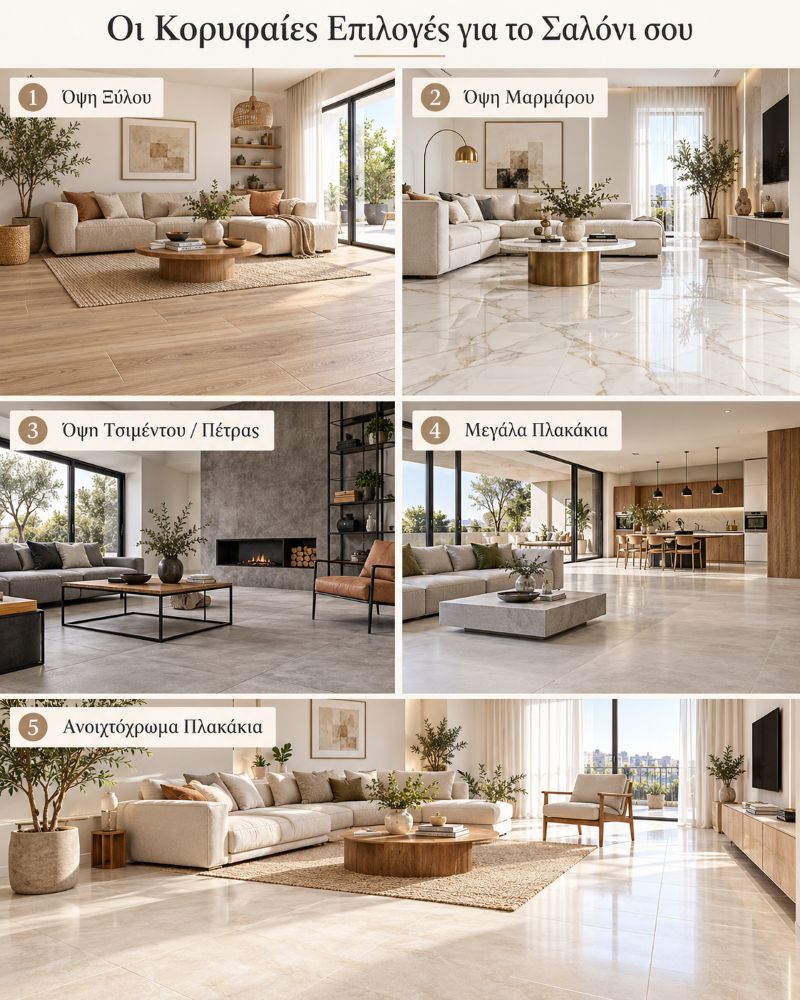
Option 1: Wood-Effect Tiles
The ideal solution if you want the warmth of wood but dread the idea of laminate getting scratched or soaking up moisture. They go beautifully with white walls, beige sofas and earthy décor.
Tip: avoid “orangey” woods that recall earlier decades. Go for natural oak shades, light brown or grey-beige.
Option 2: Marble-Effect Tiles
For living rooms that aim for classic luxury. They offer impressive brightness and elegance.
Tip: everything in moderation. A marble tile with very strong, thick black veining will draw all the attention and limit the furniture you can add. Choose something softer, such as Calacatta or Carrara styles.
Option 3: Concrete or Stone-Effect Tiles
If your style is minimal, industrial or fully contemporary, this is the safest and most timeless choice. They combine perfectly with black metal details, cool lighting and solid wood furniture.
Tip: choose a “warm” grey so the room does not look too austere.
Option 4: Large-Format Tiles
Large tiles make the floor look more continuous because they reduce grout lines. This helps a lot in living rooms and open-plan kitchen-living areas.
In a very small or awkward space with many corners, a very large tile can mean more waste and more demanding installation. There, the tiler needs to measure properly before you buy.
Option 5: Light-Coloured Tiles
Light-coloured tiles are one of the most popular choices for living rooms, especially in apartments. They make the room look cleaner, brighter and more spacious.
The easiest shades are beige, greige, light grey, off-white, light stone and natural oak in a wood-effect tile. If you already have white walls and light furniture, add some warmth with the floor. Otherwise the living room can look colourless.
Matt, Satin, Lappato or Gloss?
For the living room, the “wisest” and most practical choice is matt or satin. They are easy on the eye, do not create annoying reflections from the lights and are very easy to clean.
Gloss tiles undoubtedly look luxurious, but they are “demanding”. They show every footprint and the dust against the sunlight, and they are also more slippery.
An excellent middle ground is lappato, or semi-polished. It offers a subtle, elegant sheen without the excess and the maintenance demands of a fully polished floor.
Should I Use the Same Tile in the Living Room and Kitchen?
If you have an open-plan kitchen and living room, the same tile throughout is usually the cleanest choice. It visually connects the living room with the kitchen and makes the space look larger.
A different tile can work when you want to separate functional zones, for example the kitchen from the sitting area. But it needs the right combination of colours, textures and grout lines. Otherwise the result can look random.
If you are doing a kitchen renovation together with the living room, decide on the floor before the cabinets, worktops and colours are fixed. Tiles cover a large surface. If they do not match, they affect the whole home.
5 Common Mistakes and How to Avoid Them
- Choosing from a photo: Never buy a tile without seeing it up close. Take a sample home. The same tile looks completely different under the strong showroom lights and in the natural light of your living room.
- Forgetting about skirting and doors: The floor does not stand alone. It has to work with the interior doors, the windows and your sofa.
- The wrong grout: A very strong, dark grout between light tiles creates an ugly grid on the floor and makes it look “busy”. Always choose a grout as close as possible to the colour of the tile.
- Poor installation: The most expensive tile in the world will look cheap if it is laid crooked, unevenly or with bad cuts at the corners.
- Not allowing for waste: Do not buy exactly the square metres of the room. Especially if the room has corners or you choose large tiles, allow 10%–15% extra for cuts and to keep a few spares for the future.
To see how flooring, removals, tiling and the other works fit into an overall plan, have a look at the renovation package comparison.
When the New Floor Is Part of a Renovation
If you are changing the living room floor, this often affects the doors, the transition to the hallway and how it meets the kitchen cabinets. That is no reason to worry; it is simply why the floor should not be decided on the spur of the moment.
Thinking of changing tiles as part of a complete makeover? A well-organised home renovation helps the new floor work in harmony with the kitchen, colours, lighting and available budget, without rushed last-minute decisions.
In short, if you are looking for the “sweet spot” between beautiful and practical in living room tiles, a porcelain tile in a neutral shade is the smartest choice. It will bring light into your living room and will not tie you to particular furniture colours.
Most importantly, do not choose the tile in isolation from the rest of the décor. It is the largest surface in the room and the canvas on which your whole home will “stand”.
Is the tile change part of a bigger plan? Organise the complete renewal of your space properly, so that the floor, kitchen and lighting work together, without going over budget.
Contact us to discuss what your space needs.
Frequently Asked Questions
Which tiles make a living room look bigger?
Light-coloured, large-format tiles usually make a living room look bigger. Choose off-white, beige, greige or light grey, with a grout close to the shade of the tile.
Are matt or gloss tiles better for the living room?
For most homes, matt or satin tiles are more practical in the living room. Gloss tiles give a more striking result, but show footprints, dust and reflections more easily.
Which tiles do not show dirt easily?
No tile never gets dirty, but mid-tones with subtle veining are easier in everyday life. Very dark and very white tiles often show dust, hair and marks faster.
Should I use the same tile throughout the home?
The same tile throughout the home can give a more continuous, calm and spacious result. It is a particularly good choice in small apartments and open-plan spaces. If you want a different feel in each room, you can change material or shade, as long as there is consistency.
Which are better for a living room: ceramic or porcelain tiles?
For a living room floor, porcelain tiles are usually the better choice, because they are more durable and less absorbent. Ceramic tiles can be used for lighter-duty applications, but for the main floor of a home it is worth looking at porcelain options first.