


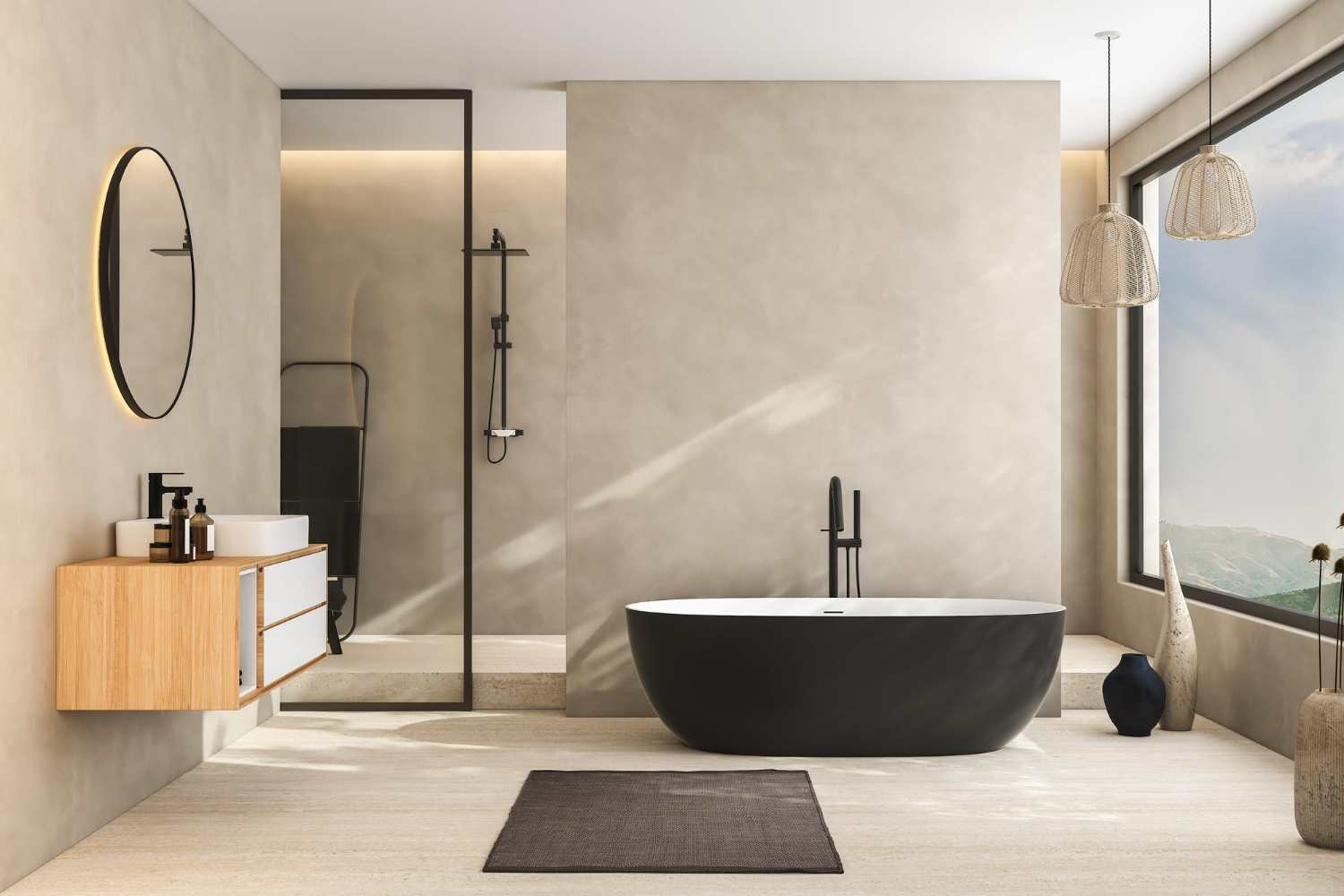
Stripping old bathroom tiles is synonymous with dust, debris, and hassle. Fortunately, modern construction offers excellent alternatives: from microcement and PVC panels to vinyl flooring, epoxy resin, waterproof paints, specialized wallpaper, natural stone, teak wood, or moisture-resistant drywall.
However, choosing the right material isn’t just a matter of aesthetics. It depends on where it will be placed: on walls, floors, inside the shower, or over old tiles. That is where the biggest mistakes happen. A material may look impressive in a photo but fail under daily water exposure without proper waterproofing. Especially in older bathrooms, you must check for hidden leaks, hollow tiles, or trapped moisture before covering existing surfaces.
Quick Guide: Alternatives to Bathroom Tiles
-
Microcement: For seamless, minimal surfaces without grout lines.
-
Waterproof PVC Panels: For fast, clean wall coverage.
-
Vinyl Flooring (LVT / PVC): For an affordable, immediate floor upgrade.
-
Epoxy Resin: For a smooth, ultra-durable finish.
-
Specialized Waterproof Paint: For walls outside the direct water zone.
-
Waterproof Wallpaper: For stylish accent walls.
-
Natural Stone or Mosaic: For a premium, spa-like aesthetic.
-
Teak Wood: For warm accents, countertops, or specialized cladding.
-
Moisture-Resistant Drywall / Cement Board: As a technical substrate and framing base.
Areas with continuous water flow, like showers, require a complete under-surface waterproofing system, a suitable substrate, and professional installation. Even with microcement, the final sealer and base waterproofing determine long-term durability.
How to Choose the Right Material
Before looking at colors, textures, and designs, start with three practical questions.
1. Is it for walls, floors, or inside the shower?
The wall behind the mirror has different requirements than the floor, while the shower is a category of its own. Walls exposed only to steam require quality waterproof paint or decorative wallpaper. Inside the shower, you need certified wet-area materials. Specialized waterproof wallpaper systems with protective coatings exist for showers, but standard “bathroom wallpaper” will ruin in weeks.
2. Are there existing tiles underneath?
If existing tiles are stable, installing new material directly over them saves time, noise, and demolition debris. Microcement, PVC panels, or tile paints apply directly over current surfaces. However, if old tiles are hollow, cracked, or trap moisture, covering them merely hides a problem that will double later.
3. Are there signs of moisture, mold, or poor sealing?
If you spot blistering, black grout lines, or a moldy smell, stop immediately. Waterproofing is the foundation of the entire installation. Especially in walk-in showers, correct slopes and a sealed substrate take precedence over the final decorative finish.
The 9 Best Tile Alternatives
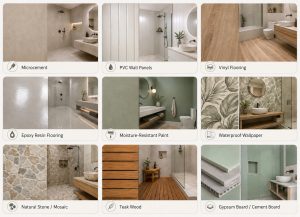
Let’s take a detailed look at the best alternatives to bathroom tiles.
1. Microcement
The most popular choice for a grout-free, minimal, or industrial look. It applies to walls, floors, sinks, built-in showers, and countertops.
- Pros: Seamless, easy to clean, and visually expands small spaces.
- Cons: Requires specialized installers. It is a multi-layer system (primer, base coats, topcoat, sealers) with zero room for technical error.
- Best for: Modern bathrooms, walk-in showers, full renovations.
2. PVC & Waterproof Wall Panels
A fast, clean solution to cover old tiles without demolition. Available in patterns mimicking marble, concrete, stone, or wood.
- Pros: Covers large areas quickly, eliminates grout, and cleans effortlessly. Certified panels are engineered for wet rooms.
- Cons: Quality varies. Choose certified waterproof systems and pay close attention to joint sealing with specialized silicone.
- Best for: Quick renovations, covering existing walls.
3. Vinyl Flooring (LVT / PVC)
Ideal for an affordable floor change without tearing up the old surface.
- Pros: Cost-effective, wide design variety (e.g., wood look), and warm underfoot.
- Cons: Requires a flat, stable, and dry substrate. If the old floor has deep grout lines or poor leveling, vinyl will telegraph those flaws.
- Best for: Budget updates, rental properties, quick refreshes.
4. Epoxy Resin
Creates a seamless, smooth, ultra-durable surface with a glossy or matte finish.
- Pros: Zero grout lines, completely waterproof, and highly resistant to chemical cleaners.
- Cons: Strictly technical application. Trapped moisture or poor substrate prep causes peeling.
- Best for: Modern floors, custom design projects.
5. Waterproof Paint & Tile Paint
The most budget-friendly intervention. Waterproof paint suits walls outside direct water spray, while tile paint refreshes existing tile colors.
- Pros: Minimal cost, fast application, high aesthetic impact.
- Cons: A cosmetic refresh rather than a structural renovation. Requires meticulous surface cleaning and degreasing before painting.
- Best for: Low budgets, walls outside the shower, temporary updates.
6. Waterproof Wallpaper
Adds distinct character, color, and pattern, turning the bathroom into a high-design space.
- Pros: Incredible design flexibility, perfect for feature walls.
- Cons: Standard vinyl wallpaper handles steam only. Shower installations require specialized systems with fiberglass mesh adhesives and protective topcoats.
- Best for: Accent walls, powder rooms, dry zones.
7. Natural Stone & Mosaics
Delivers timeless luxury, natural texture, and a spa atmosphere.
- Pros: High durability, unique aesthetic value.
- Cons: Natural stone is porous and requires regular sealing against water spots and salts. Heavy and costly.
- Best for: Premium builds, accent walls, rustic or Mediterranean styles.
8. Teak Wood & Timber Cladding
Brings a warm, organic feel into the space.
- Pros: Cozy, luxurious aesthetic. Teak contains natural oils that resist moisture.
- Cons: Not all woods are suitable. Demands good ventilation, precise installation, and periodic oil maintenance.
- Best for: Vanity tops, shelving, decorative cladding in dry areas.
9. Moisture-Resistant Drywall & Cement Board
Serves as a structural base rather than a decorative finish—ideal for building flat surfaces, drop ceilings, hidden lighting, and niches.
- Pros: Enables fast wall builds and conceals plumbing.
- Cons: In direct water zones like showers, cement board is required as a tile/finish substrate instead of standard moisture-resistant drywall.
- Best for: Drop ceilings, partitions, niches, wall prep.
Material Comparison: Cost, Durability & Application
| Μaterial | Best Use | Estimated Cost | Durability | Professional Required? |
|---|---|---|---|---|
| Microcement | Walls, floors, showers | Medium to High | High (with sealing) | Yes |
| PVC Panels | Walls, covering old tiles | Low to Medium | Good (depending on quality) |
Usually yes |
| Vinyl Flooring | Bathroom floors | Low to Medium | Good (on a level substrate) |
Recommended |
| Epoxy Resin | Floors, seamless areas | Medium to High | High | Yes |
| Waterproof Paint | Non-shower walls | Low | Moderate to Good | Not necessarily |
| Waterproof Wallpaper | Accent walls / Wet systems | medium | Good | Yes |
| Natural Stone | Premium features, walls | High | High (with maintenance) | Yes |
| Teak Wood | Vanities, accents | Medium to High | Good (with maintenance) |
Yes |
| Cement Board / Drywall | Framing, drop ceilings | Medium | Good (outside direct water) |
Yes |
Note: The table above serves as a comparison guide. The final choice should always be confirmed by an on-site technical inspection, especially if the bathroom update is part of a larger renovation. In this case, it helps to have an early overview of home renovation costs and the individual tasks that affect them.
What Can You Put Over Old Tiles Without Demolition?
The most popular options for covering existing tiles include:
- Microcement
- Waterproof wall panels (PVC)
- Specialized tile paint
- Vinyl flooring (provided the floor is level)
When NOT to cover old tiles:
- When they sound hollow when tapped.
- When there are cracks, broken sections, or black mold in grout.
- When moisture or leaking pipes exist behind the wall.
- When the floor lacks proper drainage slopes.
If you cover a compromised substrate, the new material will simply inherit the problem and be destroyed shortly after. That’s why, before moving forward, it’s worth taking a holistic look at the steps involved in a proper renovation—from setting a budget to selecting the right contractors.
Selecting the Best Option for Your Project
- For Small Bathrooms: Choose seamless materials without grout lines (microcement, large panels) and light shades. Visual continuity makes the space look larger.
- For the Shower: Waterproofing accounts for 100% of the result. Choose microcement, specialized panels, or wet wallpaper systems. Do not use simple paints.
- For Rentals / Airbnb: Opt for fast, economical, and clean solutions, such as tile paint, PVC panels, or vinyl flooring.
- For Full Renovations: Combine new plumbing, proper waterproofing, and materials like microcement or quality panels, paying close attention to slopes and ventilation.
What you can put in the bathroom instead of tiles depends on the location, budget, and condition of the existing bathroom. For a quick change, solutions like panels, paint, and vinyl flooring are available. For a more complete result, microcement or a full renovation with proper waterproofing are safer options. Choose based on water exposure, humidity, usage, and the substrate.
Want to refresh your bathroom without risking the wrong materials or poor application? Contact us today to get a quote for your space.