



Are you tired of walking barefoot in winter and feeling the floor freezing cold? Or are you in the process of building or renovating your home and looking for the most efficient heating system? Underfloor heating has been steadily gaining popularity in Greece in recent years—and not by chance.
It offers an unmatched sense of warmth, reduces energy costs, and frees your walls from traditional radiators. In this guide, we’ll explain in simple terms how it works, its advantages and disadvantages, and when it truly makes sense to choose it.
What Is Underfloor Heating and How Does It Work?
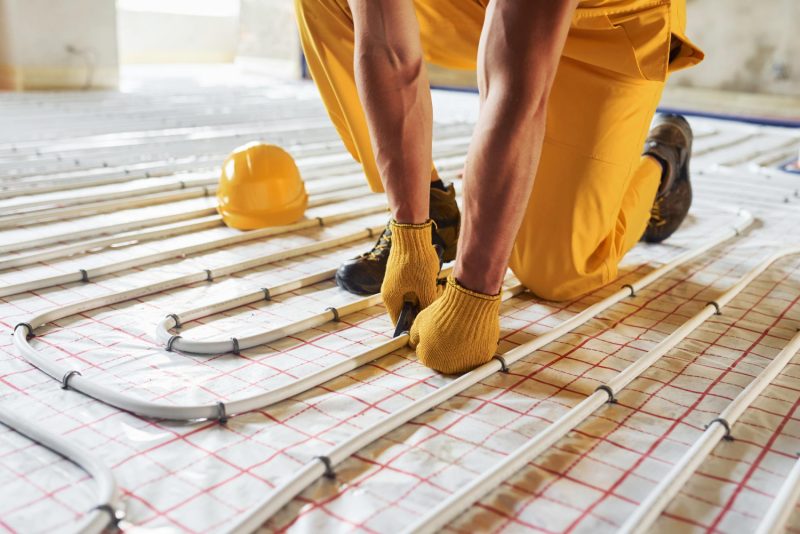
After a home renovation and the installation of underfloor heating, your floor essentially becomes a large, invisible heating surface. Instead of heat being emitted from a specific point in the room -as with radiators or air conditioners- heat is generated beneath the floor (tile, marble, or wood) and radiates evenly throughout the space. This allows warmth to rise gently from the floor upward, exactly where the human body needs it most.
The real secret of underfloor heating lies in its operating temperatures. In a hydronic system, the water circulating through the pipes beneath the floor is only about 35–45°C. This is significantly lower than the 70–80°C required for conventional radiators, making it an ideal match for heat pumps and renewable energy systems.
The Two Main Types of Systems
Not all underfloor heating systems are the same. Depending on your needs, there are two main options:
- Hydronic Underfloor Heating (Water-Based): A network of pipes beneath the floor circulates warm water. It works exceptionally well with heat pumps. While it has a higher installation cost, it offers significant savings in operating expenses. It is the number one choice for new homes or major renovations.
- Electric Underfloor Heating: Instead of water, special electric cables or heating mats are used. It is much easier to install and does not significantly increase floor height, but it consumes more electricity. It is an ideal solution for small, individual spaces, such as a bathroom renovation.
Advantages: Why Choose It
Underfloor heating offers benefits that are hard to match with other heating systems:
- Perfectly Even Heat Distribution: Say goodbye to “cold corners” in your living room. The temperature is uniform everywhere.
- Impressive Energy Savings: Due to its low operating temperatures, you may see a reduction in energy consumption of up to 25–35% compared to conventional systems.
- Freedom in Interior Design: Without bulky radiators on the walls, you can decorate your home and arrange furniture exactly as you envision.
- Healthier Indoor Environment: Since heating occurs through radiation rather than air circulation, it doesn’t create air currents that stir up dust. This makes it ideal for people with allergies or respiratory issues.
Disadvantages You Should Know
To be completely objective, there are also some points to consider:
- High Initial Cost: Materials and installation cost more than a standard radiator system.
- Slow Response Time: The system takes longer to heat up a space after being turned on—but it also retains heat longer. It is designed to operate continuously at a stable temperature rather than being switched on and off frequently.
- Flooring Limitations: Very thick carpets, such as shag rugs, act as insulation and trap heat, reducing the system’s efficiency.
Cost and When It’s Worth It
The final cost depends on the size of your home, the type of system (water-based or electric), and the flooring you choose. Tile and marble are the best heat conductors.
However, don’t focus only on installation costs. Underfloor heating is an investment that pays off quickly through reduced energy bills. It is especially worthwhile if you are building a new home, undertaking a major renovation, or planning to install a heat pump.
In Summary the underfloor heating is one of the most modern solutions for residential heating, offering high energy efficiency, comfort, and aesthetic appeal. Although it requires a higher initial investment, the energy savings and superior heating quality make it an excellent choice for new homes and renovations.